In the world of health and fitness, few new-age voices resonate as profoundly as Hayden Kelly’s. As an accredited Exercise Physiologist on the cusp of completing his PHD, Hayden’s journey is a testament to dedication, passion, and a relentless pursuit of knowledge. In a recent podcast-style interview, Hayden shared insights into his life, work, and aspirations, offering a glimpse into the mind of a true health advocate.

Hayden’s journey into the realm of exercise physiology began with a fervent passion for health, fitness, and sports. Reflecting on his formative years, Hayden recalls the early mornings spent in the gym, chasing the rush of endorphins that came with each workout. This intrinsic drive paved the way for his academic pursuits, culminating in an undergraduate degree in Exercise Physiology from the University of New South Wales.
However, Hayden’s career trajectory took a significant turn when he joined Diabetes NSW & ACT (now Diabetes Australia) in 2019. Immersed in the world of diabetes management, Hayden gained invaluable insights into the complexities and challenges faced by individuals living with diabetes. His tenure at Diabetes Australia has ignited a passion for research, leading him to embark on a PHD journey focused on scaling up physical activity interventions, particularly among younger populations.
In our conversation, Hayden shed light on the multifaceted challenges encountered by individuals living with diabetes, especially the younger demographic. From the daily management of glucose levels and insulin injections to combating stigma and misconceptions, Hayden highlighted the need for comprehensive support systems and innovative approaches to diabetes care.
One of Hayden’s recent achievements underscores his commitment to advancing research in the field of exercise physiology. He discussed his pivotal role in publishing a protocol paper for a randomized control trial focused on resistance training for teens. This milestone not only reflects Hayden’s academic prowess but also signals his dedication to translating research findings into tangible interventions.
“In Australia, only 22% of male and 8% of female adolescents meet the muscle-strengthening physical activity guidelines, and few school-based interventions support participation in resistance training (RT). After promising findings from our effectiveness trial, we conducted a state-wide dissemination of the ‘Resistance Training for Teens’ (RT4T) intervention from 2015 to 2020. Despite high estimated reach, we found considerable variability in programme delivery and teachers reported numerous barriers to implementation. Supporting schools when they first adopt evidence-based programmes may strengthen programme fidelity, sustainability, and by extension, programme impact. However, the most effective implementation support model for RT4T is unclear.
Objective: To compare the effects of three implementation support models on the reach (primary outcome), dose delivered, fidelity, sustainability, impact and cost of RT4T.
Methods and analysis: We will conduct a hybrid type III implementation–effectiveness trial involving grade 9 and 10 (aged 14–16 years) students from 90 secondary schools in New South Wales (NSW), Australia. Schools will be recruited across one cohort in 2023, stratified by school type, socioeconomic status and location, and randomised in a 1:1:1 ratio to receive one of the following levels of implementation support: (1) ‘low’ (training and resources), (2) ‘moderate’ (training and resources+external support) or ‘high’ (training and resources+external support+equipment). Training includes a teacher workshop related to RT4T programme content (theory and practical sessions) and the related resources. Additional support will be provided by trained project officers from five local health districts. Equipment will consist of a pack of semiportable RT equipment (ie, weighted bars, dumbbells, resistance bands and inverted pull up bar stands) valued at ~$A1000 per school. Study outcomes will be assessed at baseline (T0), 6 months (T1) and 18 months (T2).” — TLDR: the full overview on the research and structure being done by Hayden and the resistance training for Teens team, initiated by the fact that only 22% of male and 8% of female children, ages 10–19, meet the muscle-strengthening physical activity guidelines.
Looking ahead, Hayden’s vision extends beyond academic pursuits. While he aims to complete his PhD by the end of the year, he envisions a future filled with opportunities for collaboration, innovation, and advocacy. Whether it’s exploring postdoctoral research opportunities overseas or leveraging his expertise in project management, Hayden remains steadfast in his mission to make a meaningful impact on public health.
Away from academia, Hayden finds solace in podcasting, a platform that allows him to engage with guests and explore diverse perspectives on health and wellness. His podcast, Strength Connect, promises to be a compelling blend of practical expertise and evidence-based insights, offering listeners a holistic approach to health optimization.
For those aspiring to follow in his footsteps, Hayden offers sage advice rooted in his own experiences. He emphasizes the importance of embracing curiosity, remaining open to new opportunities, and cultivating financial literacy — a lesson he learned early in life.
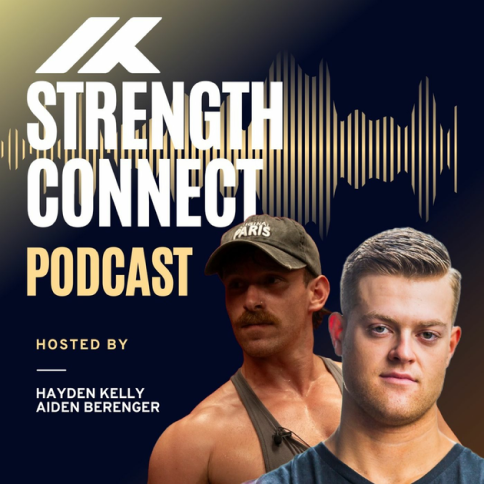
Strength Connect Podcast
As Hayden continues to chart new territories in the realm of health and research, his journey serves as an inspiration to all those striving to make a difference. With a blend of passion, expertise, and unwavering determination, Hayden Kelly is poised to leave an indelible mark on the world of health and wellness.
To connect with Hayden and stay updated on his latest endeavors, you can follow him on LinkedIn and tune in to the upcoming episodes of Strength Connect (with co-host Aiden Berenger) on Spotify, or on Simplecast. As Hayden’s journey unfolds, one thing is certain: the impact of his work will reverberate far beyond the confines of academia, shaping the future of health for generations to come.
My Key Takeaways from my time with Hayden:
1. “I have developed a passion and depth of understanding about all the complications and hurdles that people living with diabetes face with their management.”
2. “One of the main challenges that a lot of people face with diabetes is that the condition is almost like having an additional full-time job.”
3. “One of the biggest challenges (and improvements) for a lot of people with diabetes is the advancements in technology, like glucose monitoring and insulin pumps, which can also bring a lot of alerts and feedback.”
4. “One of the biggest achievements I’ve had in the last year or so has been publishing the protocol paper for the Resistance Training for Teens Hybrid Type III Implementation Effectiveness Trial.”
More on Hayden?
Check out our last conversation here, which highlights his other podcast, NORMLESS, in more detail.
More below: